First Session Guide
626 words
For a first session, begin with a concrete pressure. Put the crew on a dock, a deck, a relay tower, a customs stair, a chapel courtyard after burial, or a rain-swept road where the guide has stopped walking. Give them one problem practical enough to grasp in a minute and layered enough to unfold over hours. Then let the setting reveal itself through consequence rather than lecture. Let the harbour official be more afraid than he says. Let the priest know one thing too much. Let the engineer hear something wrong in the chamber before anyone else does. Let the local pilot refuse extra pay for one route and not explain why.
Pressure, not plot#
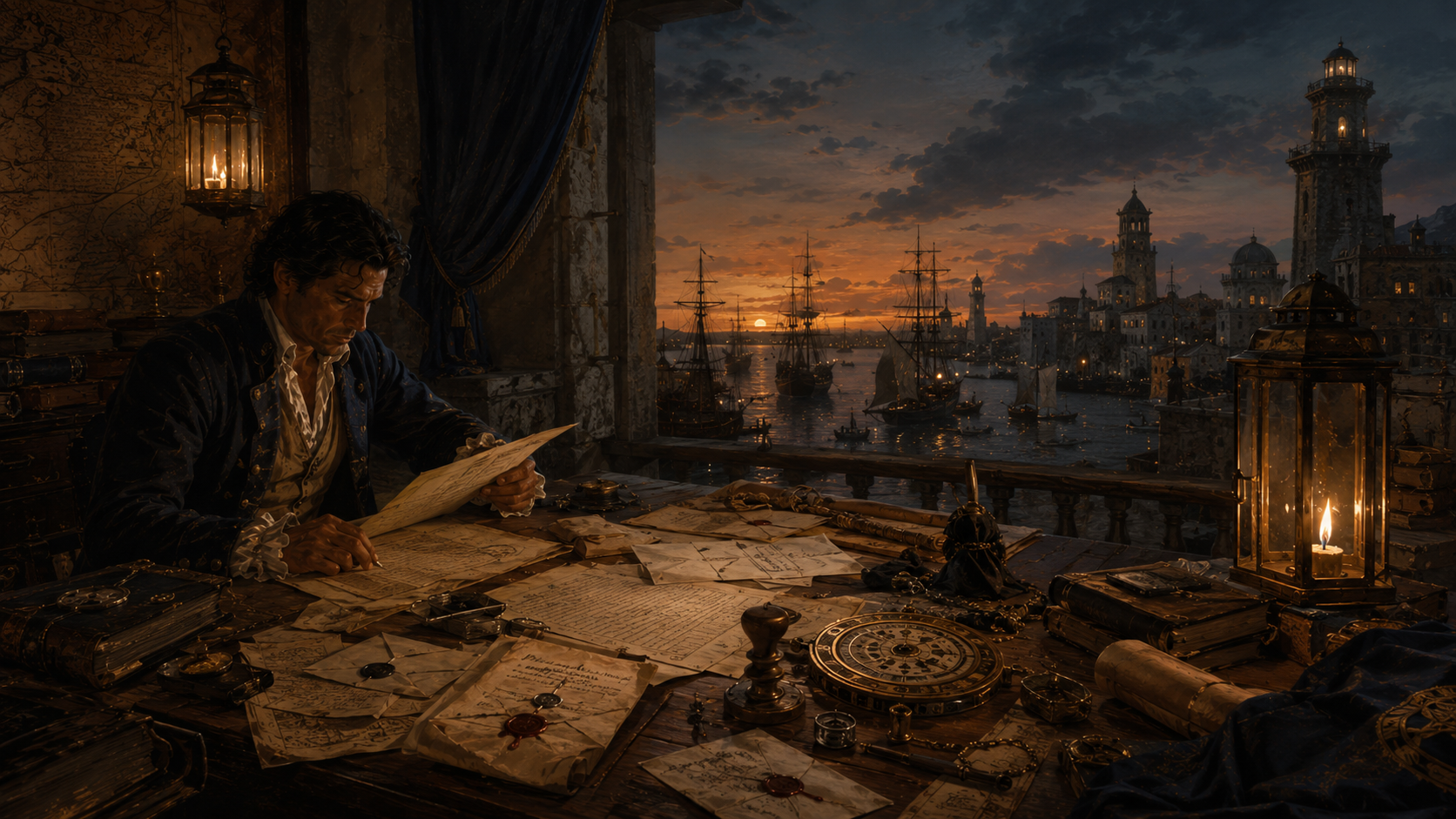
The opening scene of a Mar de Oro campaign should be doing several things at once, none of which the players need to be aware of. It should establish the physical texture of the setting: the specific quality of tropical heat, the smell of the harbor, the sound profile of a colonial port at whatever time of day the scene begins, the visual details that make it clear this is not a generic fantasy city. It should establish at least one character who is not what they seem, not because deception is mandatory but because the colonial setting is built on layered presentations, and the first NPC the crew meets should demonstrate this without announcing it. And it should generate a problem that is solvable, at least in theory, by the people present, so that the first session ends with the crew having done something rather than having been told things. The single most reliable error in first sessions is beginning with too much information and not enough situation. The crew that has been briefed on the political landscape of Mar de Oro has been given material to forget. The crew that has been placed in a situation that generates political consequences has learned the same material through experience and retained it because it was attached to something that happened to them. The setting should be allowed to teach itself.
The distinction between pressure and plot is operational. Plot is a sequence of events that the campaign follows. Pressure is a set of conditions that the crew must navigate, which generates events as a consequence of their choices. Mar de Oro runs better on pressure because its world is one in which multiple parties with competing interests are already in motion; the crew does not need to be the engine of the story, only a set of actors in a situation that was already complicated before they arrived. In the first session, pressure might take the following forms. A vessel the crew depends on has a problem that must be resolved before departure, and the resolution requires dealing with a harbor official who is being managed by someone with an interest in delay. The official problem and the real problem are not the same problem, and the crew's first challenge is recognizing the gap. Alternatively: the crew has arrived to take delivery of something, and the thing is present, but the person who was supposed to deliver it is not, and the thing has an unexpected quality that the original commission did not mention. Or: the crew has been aboard a vessel for enough of the voyage that the opening scene is the approach to port, and something about the approach is wrong in a way that the experienced sailors recognize and the official story does not explain.
None of these is a mystery in the literary sense. They are situations with pressure from multiple directions that require the crew to make decisions before they have full information, which is the structural condition of most of the best moments in this kind of campaign.